Across the nation, and particularly in regions with demanding climates such as San Diego, ceramic car coatings are on the rise. Industry analysis highlights a significant growth in the protective coatings market, with ceramic applications being the leader. Recent market research indicates that the demand for advanced car protection solutions is on an upward trajectory, fueled by a greater understanding among consumers regarding the long-term benefits and superior performance of ceramic coating technologies.
In this post, we go over ten reasons why ceramic coatings stand as a popular choice for protecting your vehicle.
Superior hydrophobic properties
One of the most immediately noticeable benefits of a ceramic coating is its exceptional hydrophobic nature. This characteristic, often referred to as water repellency, is a fundamental property engineered into the coating at a molecular level. Ceramic coatings create a surface with an extremely low contact angle with water. Imagine raindrops striking a conventionally waxed car versus one treated with a ceramic coating. On the waxed surface, water might bead up, but it tends to linger. On a ceramic-coated surface, water beads incredibly tightly and rolls off with remarkable speed, carrying away dirt and grime in the process. This self-cleaning effect, driven by hydrophobicity, keeps your vehicle cleaner for extended durations and simplifies the washing process significantly.
Enhanced resistance to swirl marks and scratches
The everyday wear and tear on a vehicle’s paint finish can be depressing to see. Fine scratches and swirl marks, often as a result of improper washing techniques, automated car washes, or even simply brushing against shrubbery, can accumulate over time, diminishing the paint’s luster and clarity. While no coating is impervious to all forms of scratches, ceramic coatings provide a significant layer of defense against these common micro-abrasions.
The advanced formulation of ceramic coatings results in a hardened, protective layer atop the vehicle’s clear coat. This added layer acts as a sacrificial barrier, absorbing some of the impact from minor scratches and swirl-inducing actions before they reach the delicate factory paint underneath.
Potent chemical resistance
Modern environments present many chemical threats to automotive paint. Acid rain, bird droppings, tree sap, industrial fallout, and road salts are all commonplace contaminants that can leave considerable damage if left unchecked. These substances can etch, stain, and corrode the clear coat, leading to costly repairs and a diminished vehicle appearance.
Ceramic coatings exhibit exceptional chemical resistance, forming a barrier that is far less reactive to these corrosive agents compared to traditional waxes or polymer sealants. In San Diego, where summer heat can exacerbate the corrosive effects of these contaminants, the chemical resistance of a ceramic coating offers an important safeguard, preserving the paint’s integrity in demanding environmental conditions.
Superior UV and oxidation protection
Prolonged exposure to ultraviolet (UV) radiation from sunlight is a primary cause of paint oxidation and fading. UV rays break down the chemical bonds in automotive paint, leading to a dull, chalky appearance over time. This is a concern in sun-drenched places like San Diego, where vehicles endure intense solar exposure for much of the year.
Ceramic coatings are engineered with UV absorbers that act as a sunscreen for your vehicle’s paint. These additives dissipate UV radiation, preventing it from reaching and damaging the underlying clear coat and color layers. This robust UV protection significantly slows down the process of oxidation and fading, maintaining the richness and depth of your vehicle’s color for years to come.
Gloss and Shine
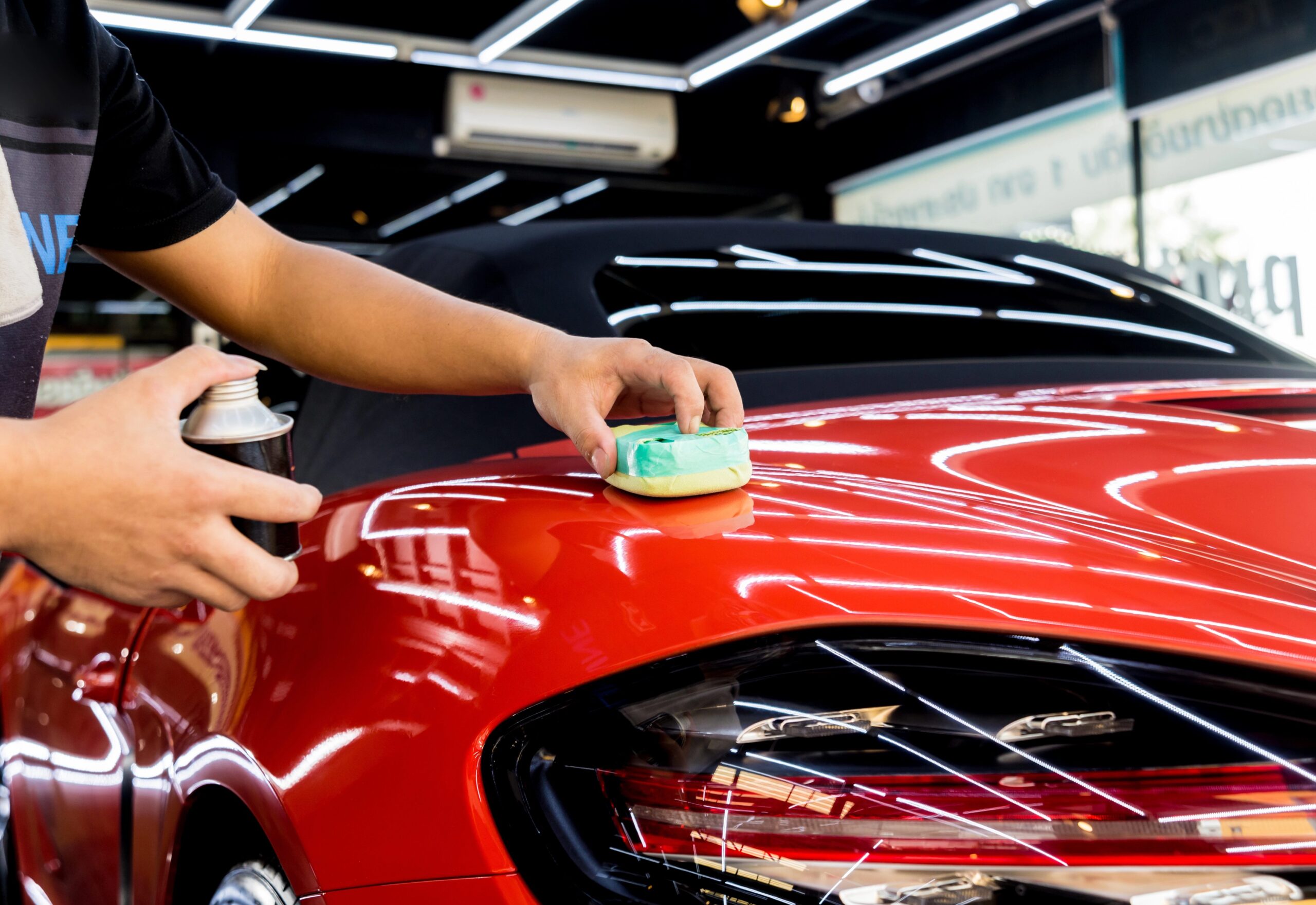
Beyond protection, ceramic coatings are renowned for the exceptional gloss and depth of shine on a vehicle’s paint. The smooth, even layer created by a ceramic coating enhances light reflectivity, resulting in a finish that appears dramatically more vibrant. This is not simply a surface shine, it’s a depth of gloss that seems to emanate from within the paint itself, amplifying the vehicle’s aesthetic presence. The application of a ceramic coating can rejuvenate even older, slightly faded paint, bringing back a richness and clarity that resembles a brand-new vehicle finish.
Simplified cleaning and reduced maintenance
The hydrophobic and non-stick properties of ceramic coatings significantly simplify vehicle cleaning and reduce ongoing maintenance requirements. Dirt, grime, and road debris have a much harder time adhering to the slick, repellent surface of a ceramic coating. This means that regular washing becomes considerably easier, often requiring just a simple rinse or a light wash with soap and water to restore the vehicle’s pristine appearance. The reduced need for aggressive cleaning methods minimizes the risk of inducing swirl marks and scratches during washing, further contributing to the longevity of the paint finish.
Extended longevity compared to traditional protectants
Traditional waxes and sealants, while offering some level of protection, are relatively short-lived. Waxes typically last for a few weeks to a couple of months, while polymer sealants might extend protection to several months. Ceramic coatings provide protection that can endure for years, not months, with some high-quality coatings offering warranties of several years or more.
This extended lifespan represents a substantial value proposition. While the upfront cost for a ceramic coating is greater than that of a wax or sealant application, the long-term protection and reduced frequency of re-application translate into a lower total cost of ownership over time.
Barrier against environmental contaminants
Ceramic coatings provide a barrier against a wide array of environmental contaminants, exceeding the protection offered by waxes and sealants. Beyond the chemical and UV resistance already discussed, ceramic coatings also guard against industrial fallout, brake dust, acid rain, and a host of other airborne pollutants that can degrade a vehicle’s finish. The dense, impermeable nature of the coating prevents these contaminants from embedding into the paint.
In urban environments like San Diego, where vehicles are exposed to a mix of environmental pollutants, this broad-spectrum protection is particularly valuable. The barrier established by a ceramic coating helps maintain the vehicle’s pristine condition, shielding it from the cumulative effects of environmental exposure and preserving its long-term aesthetic.
FAQs
1. How long does a ceramic coating last?
Professional-grade coatings typically last 2–5 years, depending on maintenance and environmental factors.
2. Can I apply a ceramic coating myself?
While DIY kits exist, professional application ensures proper surface preparation and even coverage for maximum durability.
3. Is ceramic coating resistant to scratches?
Coatings provide minor scratch resistance but aren’t a substitute for paint protection film (PPF) against deep abrasions.
4. What’s the cost difference between ceramic coating and waxing?
Ceramic coatings have higher upfront costs but save money over time by reducing detailing frequency.
5. How do I maintain a ceramic-coated car?
Use pH-neutral shampoos and avoid abrasive tools. Annual inspections at ZippyCup help maintain coating integrity.
Zippy Cup Auto Detail San Diego
596 N Mollison Ave #102, El Cajon, CA 92021
619-745-1536