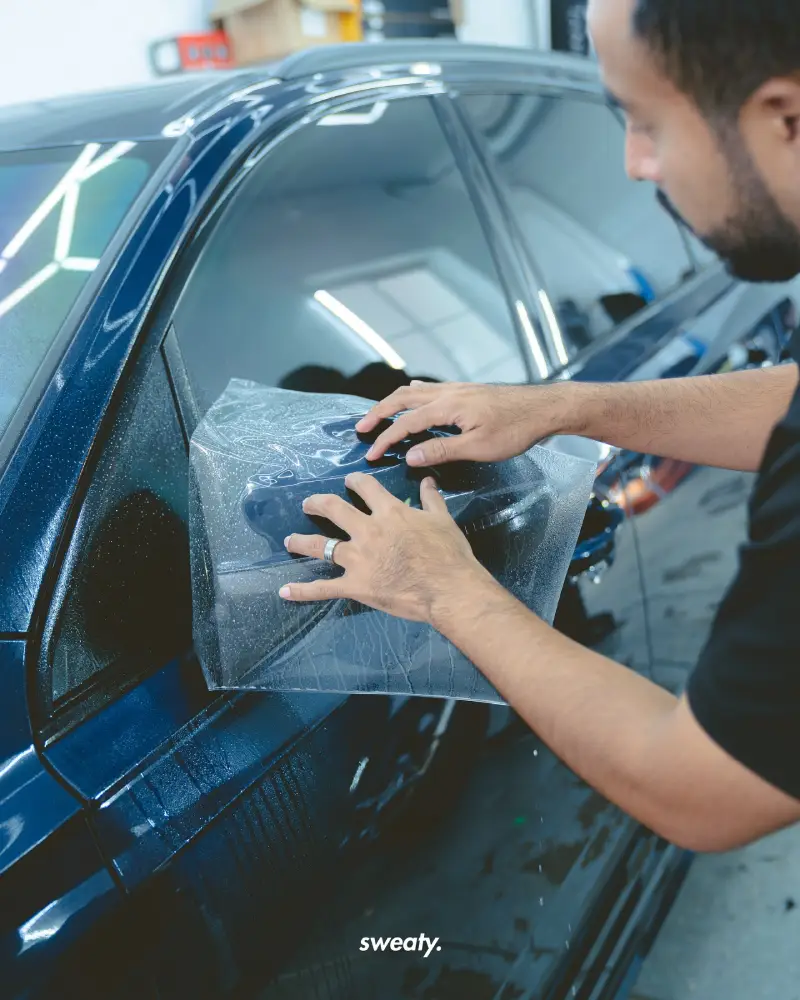
Aged paint protection film often develops yellowing or orange peel texture over time, but these issues can be corrected safely without damaging the underlying clear coat. By using PPF-safe rejuvenators, light polishing, and controlled heat treatment, it’s possible to restore clarity and smoothness while maintaining the film’s protective properties. Following a careful, step-by-step process ensures the best results.
Understanding the Problem
Causes of Yellowing in PPF
Yellowing of PPF is primarily caused by prolonged UV exposure, which oxidizes the film over time. Environmental factors, such as dust, tar, and airborne chemicals, can bond with the surface, further contributing to discoloration. The adhesive layer in older film may also degrade, producing a yellow tint.
Even minor yellowing can make a car’s paint appear dull and reduce the effectiveness of the protective layer. Understanding the causes helps in selecting the correct restoration method to preserve the underlying clear coat.
Causes of Orange Peel Texture
Orange peel texture occurs when the PPF develops a bumpy or uneven surface. This is often the result of improper installation, such as trapped air bubbles or uneven stretching. Additionally, heat exposure over time can cause the film to shrink slightly, creating a rippled effect. Environmental factors and natural aging also contribute to more pronounced textures, which make the film appear irregular.
Addressing the orange peel texture requires careful attention. Overly aggressive techniques can damage both the film and the underlying paint, so knowing the root causes is essential.
Methods to Restore PPF
| Method | Pros | Cons | Risk to Clear Coat |
| PPF Rejuvenator | Restores gloss, reduces yellowing | May need multiple applications | Low if applied correctly |
| Polishing | Smooths minor orange peel | Labor-intensive, requires precision | Medium if too aggressive |
| Heat Treatment | Relaxes minor texture | Can warp film if overdone | High if not controlled |
| Chemical Treatment | Reduces discoloration | Can remove protective layer | Medium-High |
Most restoration projects involve a combination of cleaning, rejuvenation, and light polishing. Selecting the right method depends on the severity of the yellowing or texture issues.
During a recent consultation in El Cajon, CA, technicians noted that many vehicles with PPF develop minor orange peel within the first few years, which can usually be addressed without replacing the film entirely.
Step-by-Step Restoration Process
Tools and Materials Needed
- Microfiber towels
- Isopropyl alcohol (IPA) solution
- Automotive-grade polish and compound
- PPF-safe rejuvenator
- Dual-action polisher (optional)
- Heat gun (for minor texture adjustments)
Having the correct tools is critical to restoring the film without causing additional damage. Testing products in a small, inconspicuous area ensures safe results.
Restoration Procedure
- Clean the Surface Thoroughly
Begin by washing the vehicle with mild soap and water to remove surface contaminants. Follow this with an IPA wipe-down to ensure that the film is completely clean. Clean surfaces allow rejuvenators and polish to work effectively while minimizing the risk of scratches. - Assess the Film Condition
Evaluate whether the yellowing or texture issues are superficial or severe. This assessment helps determine whether light polishing or heat treatment is necessary. In some cases, minor yellowing can be addressed with a rejuvenator alone. - Apply PPF Rejuvenator
Using a microfiber applicator, apply a PPF-safe rejuvenator in small, manageable sections. Work in circular motions to evenly distribute the product and restore gloss. This step reduces yellowing without compromising the film. - Polish Lightly for Orange Peel
For areas with minor orange peel, apply a fine polish or compound using a dual-action polisher. Maintain minimal pressure and work slowly to avoid thinning the film. Over-polishing can damage both the PPF and the underlying clear coat, so precision is key. - Controlled Heat Treatment
If the orange peel persists, a heat gun can be used to relax the film. Apply heat in short, consistent bursts, keeping the gun moving to prevent overheating. Controlled heat smooths minor irregularities while maintaining the film’s integrity. - Apply a Protective Coating
Once the restoration is complete, apply a PPF-safe sealant to maintain gloss and protect the surface from further discoloration. A protective coating enhances durability and slows the onset of yellowing over time.
During a vehicle inspection i, technicians emphasized that following these steps carefully preserves both the PPF and the underlying paint, thereby extending the protective layer’s life.
Applying This to Solve the Problem
The most effective approach to removing yellowing or orange peel texture is a methodical, cautious one. Start with the least aggressive methods and only escalate to polishing or heat treatment when necessary. Testing all products in a small area ensures that the process will not damage the clear coat. Regular maintenance, including gentle washing and the application of protective coatings, prolongs PPF’s lifespan.
Paint Protection Film in El Cajon provides long-lasting clarity and protection when restored and maintained properly. By following the recommended steps, vehicle owners can achieve a smooth, glossy finish without compromising the underlying paint.
Common Misconception Debunked
Myth: Polishing PPF aggressively is safe because it is just a plastic layer.
Truth: Excessive polishing can thin the film, reduce UV protection, and damage the clear coat beneath. Gentle polishing techniques using PPF-safe products are the safest way to restore the surface.
This misconception often leads to unnecessary film replacement. Many vehicle owners have learned that proper restoration techniques extend the life of their PPF in El Cajon, CA, without additional costs.
Maintenance Tips After Restoration
- Use non-abrasive cleaning methods to avoid scratches.
- Regularly inspect PPF for early signs of yellowing.
- Reapply PPF-safe coatings to maintain gloss and clarity.
- Whenever possible, park in shaded areas to limit UV exposure.
El Cajon Paint Protection Film owners who follow these maintenance tips see the best results in clarity and smoothness over time, even in areas with strong sun exposure.
In Summary
Removing yellowing and orange peel texture from aged paint protection film is achievable without damaging the underlying clear coat. Using a step-by-step approach, including cleaning, PPF rejuvenation, light polishing, and controlled heat treatment, restores both clarity and smoothness. Testing products in small areas and maintaining the film regularly ensures long-term results. Vehicle owners in El Cajon, CA, who follow these methods consistently maintain protective, clear, and visually appealing PPF.
Paint Protection Film can maintain its clarity and protective performance for years with proper care and consistent maintenance. Following the right techniques helps preserve a smooth, glossy finish and extends the life of the film. For professional assistance, Zippy Cup Auto Detail offers expert support to help keep the finish in excellent condition.
Contact us today to schedule a consultation or learn more about professional PPF care services.
People Also Ask
Q: Can I remove yellowing from PPF at home safely?
A: Yes, minor yellowing can be restored using PPF-safe rejuvenators and gentle cleaning, but aggressive methods can damage the film.
Q: Will polishing PPF damage my car’s clear coat?
A: Polishing can be risky if done with harsh compounds or excessive pressure. Using fine polish and gentle application minimizes the risk.
Q: How long does restored PPF last before yellowing returns?
A: With proper care, restored PPF can remain clear for years. Routine cleaning and protective coatings extend its lifespan.
Q: Does heat treatment work on all PPF texture issues?
A: Heat is most effective for minor orange peel or slight irregularities. Severe texture problems may require professional attention.
Q: Where can I get professional advice for PPF care?
A: Certified technicians in El Cajon, CA, can provide guidance on restoring and maintaining paint protection film safely.