Purple bubbling in low-cost window film results from UV-driven dye degradation combined with adhesive breakdown under heat cycling and environmental contamination. As the film’s chemical structure destabilizes, gases and moisture become trapped between layers, producing visible bubbles and a shift in purple or magenta tint. Professional installers prevent this failure by using chemically stable film systems, strict surface preparation protocols, and controlled curing environments that preserve adhesive integrity over time.
Material Degradation and Early Film Instability
Cheap dyed films are structurally limited because their color is embedded in organic compounds that are not UV-stable. When exposed to prolonged sunlight, these compounds break down unevenly, which alters both optical clarity and physical cohesion. This is the earliest stage of purple discoloration and often precedes visible bubbling by several months.
In many diagnostic cases involving Window Tint in El Cajon, CA, technicians find that degradation begins at micro-level fractures long before customers notice visual failure. These fractures expand under thermal cycling, allowing moisture ingress and accelerating adhesive separation.
Adhesive Chemistry Breakdown Over Time
Adhesive failure is a layered process rather than a single event. Pressure-sensitive adhesives rely on uniform surface contact and controlled chemical bonding with glass. When contamination or improper installation occurs, bond strength is reduced from the start.
In El Cajon, window-tinting environments, one of the most consistent findings is that microscopic surface oils or dust particles prevent full adhesive wet-out, leaving weak zones that expand under heat stress. These weak zones become entry points for air and moisture, leading to progressive bubbling and eventual delamination.
Environmental Contamination and Installation Sensitivity
Window film installation is highly sensitive to environmental conditions. Dust, humidity fluctuations, and temperature instability can all interfere with bonding performance. Even small airborne particles can disrupt adhesive uniformity and create long-term failure points.
This is particularly relevant in Window Tinting, where fluctuating daytime heat and cooler nighttime temperatures create repeated expansion-and-contraction cycles in installed film systems. Without controlled application environments, adhesive systems degrade significantly faster than expected.
Film Layer Composition and Failure Triggers
Window film consists of multiple engineered layers, each contributing to durability and optical performance. When one layer fails, it compromises the entire system.
Definition List: Film Structure Components
- Polyester base layer: Provides structural stability and dimensional integrity
- Dyed or ceramic layer: Determines heat rejection and visible light behavior
- UV inhibitor layer: Slows chemical breakdown under sunlight exposure
- Pressure-sensitive adhesive: Bonds film to glass under controlled pressure
Failure typically begins in the dyed layer, where UV exposure destabilizes molecular bonds. This triggers cascading stress across adhesive and structural layers.
Thermal Cycling and Bubble Formation Mechanics
Thermal cycling is one of the most destructive forces affecting the longevity of window film. As glass heats during the day and cools at night, it expands and contracts. Cheap adhesives cannot maintain consistent elasticity across these shifts.
In practical field analysis, Window Tinting in El Cajon cases show that repeated thermal cycling leads to micro-void formation, which gradually fills with moisture. These voids evolve into visible bubbles, especially on south- and west-facing glass surfaces.
Installation Process Control and Precision Techniques
Professional installers mitigate failure by controlling every stage of application. Glass is thoroughly decontaminated using multi-phase cleaning systems that remove oils, silica dust, and microscopic residues that interfere with adhesion.
Film positioning is managed using slip solutions calibrated to allow movement without weakening adhesive bonding strength. After installation, controlled heat curing stabilizes the adhesive interface and removes residual moisture.
In controlled setups such as window tinting, curing protocols significantly reduce early-stage bubble formation compared to uncontrolled environments, such as open garages or outdoor installations.
Why Material Selection Outperforms Repair Attempts
Once bubbling begins, repair attempts are typically ineffective because the underlying chemistry has already failed. This is why material selection is more important than post-installation correction.
Dyed films degrade because their pigment structure is organic and unstable under UV exposure. Ceramic and sputtered films, by contrast, use inorganic structures that resist both fading and structural breakdown.
A comparative evaluation in Granite Hills found that ceramic films maintained optical clarity significantly longer than dyed alternatives under identical exposure conditions, reinforcing the importance of selecting high-stability materials from the start.
Misconception: Installation Alone Determines Film Lifespan
A common misconception is that bubbling is always caused by poor installation technique. While installation quality is important, it is not the only determining factor in long-term performance.
In reality, material chemistry plays an equal or greater role in durability. Even perfectly installed low-grade films will eventually fail under UV stress, while high-quality films can tolerate minor installation variability without significant degradation.
Key Clarification:
- Immediate defects = installation-related issues
- Delayed bubbling = material or adhesive failure
- Purple discoloration = UV dye breakdown
This distinction is critical for accurate diagnosis and prevention strategies.
Performance Metrics That Influence Longevity
Film quality cannot be judged by appearance alone. Technical specifications provide a more reliable indicator of long-term performance.
Definition List: Key Performance Indicators
- UV rejection rate: Percentage of ultraviolet radiation blocked
- Infrared rejection: Reduction of heat energy transmission
- Visible light transmission (VLT): Amount of light passing through film
- Optical distortion rating: Measurement of visual clarity degradation
- Adhesive shear strength: Resistance to lateral stress over time
High-performing films maintain consistent values across all categories rather than excelling in just one.
In Fletcher Hills environments, high solar exposure amplifies weaknesses in low-spec films, particularly those with weak UV rejection ratings.
Controlled Installation Environments and Their Impact
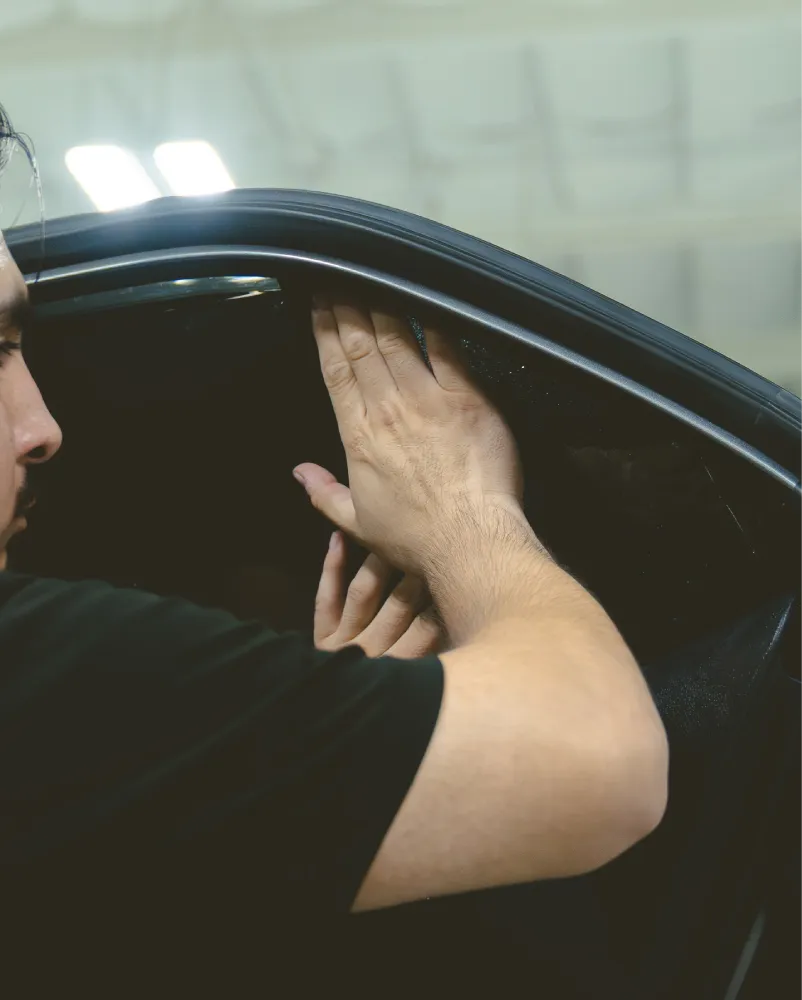
Environmental control during installation is one of the most effective ways to reduce long-term failure rates. Dust control systems, humidity regulation, and temperature stabilization all contribute to stronger adhesive bonding.
Even minor airborne contamination can create microscopic voids that later expand into visible defects. Professional-grade installations minimize these risks by creating controlled indoor environments and adhering to strict procedural standards.
This is particularly important in Window Tinting, where ambient conditions can shift rapidly throughout the day, increasing the likelihood of curing inconsistencies.
Material Categories and Real-World Performance
Different film types behave differently under stress conditions:
- Dyed films: low cost, rapid UV degradation, highest risk of purple bubbling
- Metalized films: moderate durability, potential signal interference
- Ceramic films: high clarity, strong UV and IR stability
- Hybrid films: balanced performance with improved adhesion stability
Each category responds differently to heat, UV exposure, and adhesive stress. Selecting the correct material is the most important long-term decision in any installation.
Misconception: Thicker Film Means Better Quality
Film thickness is often mistaken for durability, but it is not a reliable indicator of performance. A thick film with unstable dye chemistry will fail faster than a thinner ceramic film with superior adhesive structure.
In El Cajon, customers frequently assume that physical thickness correlates with heat rejection or lifespan, but actual performance depends on chemical stability and UV resistance, not material bulk.
Long-Term Durability Expectations
Under ideal installation conditions, ceramic and high-grade metalized films can last 10–20 years. Dyed films typically begin to show visible degradation within 1–3 years in high-UV environments.
Thermal cycling remains the dominant long-term stressor, gradually weakening even high-quality systems if installation standards are not maintained.
In Bostonia, repeated exposure to freeway heat and direct sunlight accelerates degradation in low-grade films, making material selection especially critical.
In Summary
Purple bubbling in window film is caused by a combination of UV-driven dye degradation, adhesive breakdown, and environmental stress. Professional installers prevent these failures through controlled installation environments, advanced material selection, and precise surface preparation that ensures long-term bond stability.
For long-term performance, the most important factor is not just installation technique but the chemical integrity of the film itself. Proper system design eliminates early failure modes and preserves optical clarity over time.
If you are experiencing fading, bubbling, or adhesive separation, professional evaluation is essential. El Cajon window tinting solutions from experienced technicians can restore performance and prevent recurring issues, such as those provided by Zippy Cup Auto Detail.
For expert service and long-lasting results, contact us today, your trusted source for precision installation, durable film systems, and professional-grade protection.
People Also Ask
Why does the window tint bubble after installation?
Bubbling usually occurs due to trapped moisture, contamination during installation, or adhesive failure under thermal stress.
Can purple window tint be reversed?
No. Purple discoloration is caused by the chemical breakdown of dyes, which cannot be restored once degradation begins.
How long should quality window film last?
High-quality ceramic or metalized films can last 10–20 years, depending on exposure and installation quality.
What causes window tint to fail prematurely?
Premature failure is typically caused by low-quality materials, poor surface preparation, or uncontrolled installation conditions.