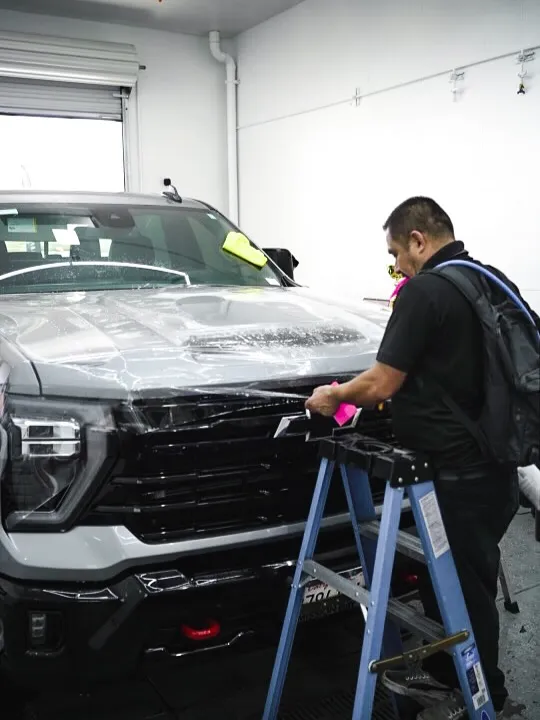
Paint Protection Film (PPF) prevents rock chips and scratches by absorbing impacts before they reach your paint. It creates a transparent, durable barrier that preserves your vehicle’s finish, reduces long-term repair costs, and maintains resale value.
What Is Paint Protection Film and How Does It Work?
PPF is a thermoplastic urethane film engineered to protect automotive paint from physical damage and environmental exposure. It’s applied directly to painted surfaces and designed to flex under stress rather than crack or fail.
Unlike temporary solutions, PPF is a long-term protective layer. It bonds securely to the surface while remaining removable, which makes it both durable and reversible. Modern films are optically clear, meaning they won’t distort the color or finish of your vehicle.
Key Features (Definition List)
Material Composition
: Multi-layer urethane designed for elasticity, impact resistance, and longevity.
Self-Healing Technology
: Fine scratches and swirl marks disappear when exposed to heat, such as sunlight or warm water.
Hydrophobic Properties
: Repels water, dirt, and contaminants, reducing the frequency and effort of cleaning.
UV Resistance
Protects against oxidation and fading caused by prolonged sun exposure.
Finish Versatility
: Available in gloss, satin, or matte to match or customize your vehicle’s appearance.
How PPF Prevents Rock Chips and Scratches
Every mile you drive exposes your vehicle to abrasive elements, gravel, sand, debris, and even improper washing techniques. PPF functions as a sacrificial layer, taking damage so your paint doesn’t.
- Impact Absorption – The film disperses the force from rocks and debris, preventing chips.
- Abrasion Resistance – Reduces micro-scratches caused by dust and contact.
- Chemical Protection – Shields paint from acidic contaminants like bird droppings or bug residue.
- Thermal Healing – Minor surface damage disappears with heat activation.
During a recent audit for a firm in Fletcher Hills, we documented a clear difference: vehicles with PPF retained smooth front-end finishes, while unprotected ones showed visible pitting and chips after a year of highway use.
PPF vs Other Paint Protection Options
Comparison Table: PPF vs Ceramic Coating vs Wax
| Feature | Paint Protection Film | Ceramic Coating | Traditional Wax |
| Rock Chip Protection | Excellent | None | None |
| Scratch Resistance | High (self-healing) | Moderate | Low |
| Longevity | 5–10 years | 2–5 years | Weeks to months |
| Maintenance | Low | Moderate | High |
| Cost | Higher upfront | Mid-range | Low |
| Appearance Enhancement | High | High | Moderate |
Ceramic coatings and waxes improve appearance and offer chemical resistance, but they do not stop physical damage. PPF is the only option that directly prevents rock chips.
Where Should You Apply PPF?
Not every vehicle requires full-body coverage. The key is aligning protection with risk exposure.
Most Common Coverage Areas
- Front Bumper and Hood – The highest impact zones during driving
- Side Mirrors – Frequently hit by debris and insects
- Door Edges and Handles – Protect against daily wear and accidental contact
- Fenders and Rocker Panels – Vulnerable to debris kicked up from tires
- Full Vehicle Wrap – Ideal for high-value or enthusiast vehicles
In Rancho San Diego, a client opted for partial front coverage to avoid repainting costs after repeated highway trips. Strategic placement delivered most of the benefit at a lower cost than full coverage.
Applying our Surface Defense Matrix to Solve This
To remove guesswork, we use a structured decision model called the Surface Defense Matrix. This framework evaluates whether PPF is necessary and, if so, how much, based on real-world usage conditions.
Surface Defense Matrix (Clear Framework)
Exposure Score
: Frequency of highway driving, construction zones, and debris-heavy roads.
Usage Profile
: Daily drivers accumulate damage faster than weekend vehicles.
Environmental Load
: UV intensity, airborne contaminants, and weather patterns.
Cost Efficiency Ratio
: Comparing installation cost versus potential repaint or repair expenses.
This framework allows for precise recommendations. For example, a commuter vehicle with high exposure scores typically justifies front-end or full-body protection, while a low-use vehicle may only need targeted areas covered.
Common Industry Myth: “PPF Will Damage Your Paint”
This misconception persists, but it’s not accurate when modern materials and proper installation are involved.
The Reality
- High-quality PPF uses adhesives engineered for safe removal.
- Factory paint remains intact when film is removed correctly.
- Protected surfaces often look newer than unprotected ones after years of use.
In Granite Hills, we evaluated a vehicle with long-term film application. After removal, the protected sections showed minimal aging compared to exposed panels, confirming that PPF preserves rather than harms paint.
PPF and Paint Correction: Why They Work Together
PPF preserves the paint’s condition at the time of installation. That’s why surface preparation is critical. Many vehicle owners exploring Paint Correction in El Cajon, CA, services choose to correct imperfections first to ensure the film locks in a clean, defect-free finish.
Why Paint Correction Matters
- Removes swirl marks and oxidation
- Enhances gloss and clarity
- Creates a uniform surface for film adhesion
Skipping this step can result in visible imperfections being sealed beneath the film, which defeats part of the purpose of installing PPF in the first place.
Cost vs Value: Is PPF Worth It?
PPF requires a higher upfront investment, but it changes the long-term cost equation. Drivers comparing options like Paint Correction in El Cajon often realize that while correction improves appearance, it doesn’t prevent future damage, meaning the process may need to be repeated.
Cost Considerations
- Partial coverage reduces upfront expense while targeting high-risk areas
- Full coverage offers maximum protection but at a higher cost
Value Outcomes
- Eliminates or reduces repainting costs
- Maintains higher resale value
- Minimizes the need for repeated detailing
From a financial standpoint, PPF functions as preventative maintenance rather than a cosmetic upgrade.
Installation Process Overview
The effectiveness of PPF depends heavily on the quality of installation. Pairing the process with El Cajon, CA Paint Correction ensures the surface is properly prepped, which directly affects both appearance and longevity.
Step-by-Step Installation
- Surface Decontamination – Removes embedded contaminants
- Paint Correction (if required) – Levels imperfections
- Film Preparation – Pre-cut or custom-fit templates
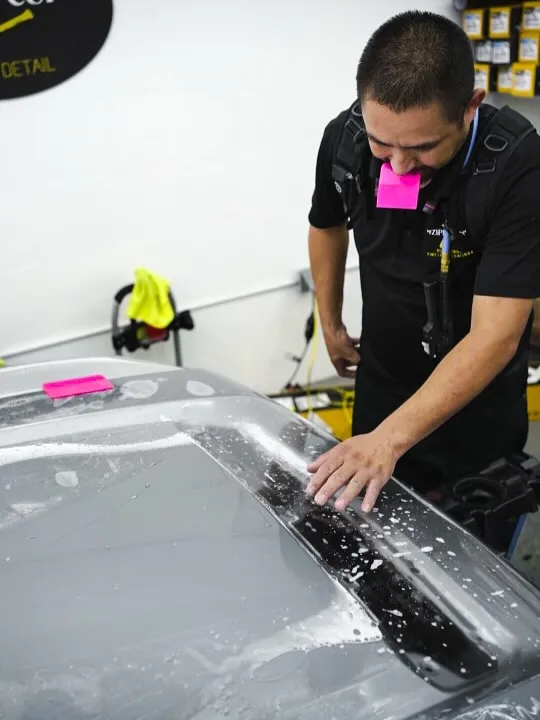
- Application – Wet method ensures precise alignment
- Curing Phase – Adhesive bonds fully over 24–48 hours
Poor installation can lead to visible edges, bubbling, or premature failure, so expertise matters.
Maintenance Tips for Long-Term Performance
PPF is relatively low maintenance, but proper care ensures it performs as intended over its lifespan.
Best Practices
- Wash regularly using pH-neutral products
- Avoid automatic car washes with abrasive brushes
- Use microfiber towels for drying
- Remove contaminants like bug residue promptly
Some owners choose to apply a ceramic coating over PPF to enhance hydrophobic performance, though it’s optional.
In Summary
Paint Protection Film is one of the few solutions that actively prevents damage rather than simply masking it. Shielding your vehicle from scratches, chips, and environmental wear, it helps reduce long-term maintenance costs while preserving that fresh, showroom-quality finish. Instead of relying on repeated polishing or corrections, you’re investing in durable, proactive protection. At Zippy Cup Auto Detail, this approach ensures your vehicle not only looks better for longer but also retains its value with far less upkeep over time.
If you want to avoid chips, scratches, and unnecessary repainting, the next step is straightforward. Contact us today to get a tailored protection plan based on how and where you drive. The right protection applied early will always cost less than fixing damage later.
People Also Ask (FAQ)
What is Paint Protection Film made of?
PPF is made from thermoplastic urethane, a flexible material that absorbs impact and resists scratches while remaining transparent.
How long does Paint Protection Film last?
Most high-quality films last between 5 and 10 years, depending on driving conditions and maintenance.
Can Paint Protection Film be removed safely?
Yes, when removed by a professional, it does not damage factory paint.
Does PPF affect the look of my car?
No, it maintains or enhances the original finish. Matte and satin options can also intentionally change the appearance.
Is PPF better than ceramic coating?
They serve different purposes. PPF protects against physical damage, while ceramic coatings provide chemical resistance and gloss.
Do I need paint correction before installing PPF?
Yes, correcting the paint ensures that defects are not trapped beneath the film.