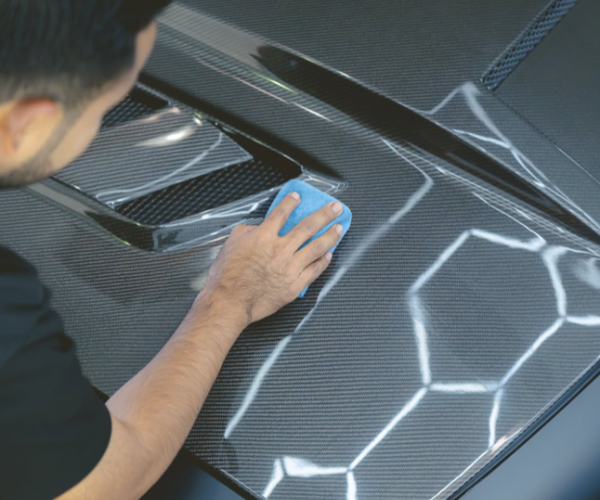
Ceramic coating protects car paint by creating a durable, hydrophobic layer that helps reduce exposure to UV rays, oxidation, and environmental contaminants. It makes water and dirt easier to remove while helping preserve the paint’s gloss and appearance. Although it cannot prevent every type of damage, it provides an additional layer of protection against everyday environmental exposure.
How Does Ceramic Coating Create a Protective Barrier Over Car Paint?
Ceramic coating is a liquid protective product, often formulated with silicon dioxide (SiO₂), that bonds to a vehicle’s clear coat after proper surface preparation. Once cured, it forms a thin layer that changes how water, dirt, and contaminants interact with the painted surface.
Unlike traditional wax, which provides temporary surface protection, ceramic coating is designed to offer greater durability. Its chemical properties help resist certain contaminants while maintaining the vehicle’s gloss.
What Makes Ceramic Coating Different from Traditional Car Wax?
Both products protect automotive paint, but their formulations, durability, and maintenance requirements differ.
| Feature | Ceramic Coating | Traditional Car Wax |
| Protection | Durable protective layer | Temporary surface protection |
| Water repellency | Strong hydrophobic properties | Water-beading effect |
| Durability | Months to years, depending on product | Usually weeks to months |
| Chemical resistance | Better resistance to certain contaminants | More limited resistance |
| Gloss | Enhances paint depth and shine | Adds surface shine |
| Maintenance | Requires coating-safe maintenance | Requires more frequent reapplication |
Ceramic coating is a practical choice for vehicle owners who want more durable surface protection and easier routine cleaning. However, actual performance depends on the coating formulation, application quality, and maintenance.
How Does Ceramic Coating Protect Car Paint from UV Rays?
Ultraviolet radiation from sunlight contributes to automotive paint deterioration. Prolonged exposure can accelerate oxidation, fading, and clear coat degradation, particularly on vehicles regularly parked outdoors.
Ceramic coating adds a protective layer that helps reduce the effects of environmental exposure. Depending on its formulation, it may provide some UV-related protection and help maintain the appearance of the underlying paint.
However, ceramic coating does not completely block ultraviolet radiation. Parking in shaded areas, washing regularly, and maintaining the vehicle are still important for preserving the finish.
What Are the Signs of UV Damage on Car Paint?
UV-related deterioration often develops gradually. Vehicle owners may notice changes in the paint’s color, texture, and reflective appearance.
Common signs include:
- Faded paint: The original color becomes less vibrant after prolonged sunlight exposure.
- Oxidation: The surface develops a dull or chalky appearance.
- Reduced gloss: The paint loses its original shine and reflective quality.
- Clear coat deterioration: The transparent protective layer may begin peeling or developing visible defects.
- Uneven appearance: Areas exposed to more direct sunlight may show greater fading than shaded sections.
Applying ceramic coating to properly prepared paint helps provide an additional barrier against environmental exposure. However, existing oxidation and clear coat damage should be addressed before application.
What Types of Environmental Damage Can Ceramic Coating Help Prevent?
Vehicles encounter different contaminants during everyday driving and parking. Bird droppings, tree sap, road grime, mineral deposits, and airborne pollutants can accumulate on painted surfaces.
Ceramic coating reduces the adhesion of certain contaminants, making them easier to remove during routine washing. This helps limit prolonged contact between harmful residues and the underlying clear coat.
Bird Droppings and Tree Sap
Bird droppings can contain acidic compounds that etch automotive paint when left on the surface, especially in warm conditions. Tree sap can also become difficult to remove and may leave stubborn deposits or stains.
Road Salt, Dirt, and Chemical Contaminants
Road grime, salt, industrial fallout, and other pollutants can accumulate on automotive finishes. If not removed, these substances may contribute to staining, surface contamination, and deterioration.
Ceramic coating helps reduce contaminant adhesion, allowing dirt and certain residues to be removed more easily during washing. This is particularly useful for vehicles frequently driven through busy roads or exposed to changing weather conditions.
For vehicle owners considering ceramic coating in Oceanside, CA, coastal exposure is an important consideration. Airborne salt, moisture, and sand can settle on exterior surfaces, making regular washing and paint maintenance necessary.
Acid Rain and Airborne Pollutants
Rainwater can collect pollutants from the atmosphere, while airborne contaminants may settle on vehicles during everyday use. Certain acidic substances can contribute to staining and paint etching when exposure is prolonged.
Ceramic coating provides resistance against some chemical contaminants, helping reduce their direct interaction with the underlying clear coat. Regular washing remains necessary to remove accumulated residues before they affect the finish.
For vehicles frequently exposed to outdoor conditions, Oceanside, CA ceramic coating can be a useful option for adding protection against everyday environmental contaminants.
| Environmental Threat | Potential Paint Damage | How Ceramic Coating Helps |
| UV rays | Fading and oxidation | Helps reduce environmental deterioration |
| Bird droppings | Etching and staining | Makes residue easier to remove |
| Tree sap | Sticky deposits and staining | Reduces contaminant adhesion |
| Road salt | Surface contamination and corrosion-related risks | Adds a protective barrier |
| Water minerals | Water spots | Encourages water to move off the surface |
| Airborne pollutants | Staining and chemical exposure | Provides resistance to certain contaminants |
Ceramic Coating vs. Paint Protection Film: Which Offers Better Protection?
Ceramic coating and paint protection film (PPF) serve different purposes. Ceramic coating focuses on surface protection, gloss, and hydrophobic performance, while PPF provides a physical barrier against road debris and minor impacts.
| Protection Feature | Ceramic Coating | Paint Protection Film |
| Hydrophobic properties | Typically strong | Depends on film type |
| Gloss enhancement | Yes | Depends on film finish |
| Chemical resistance | Yes | Depends on film type |
| Stone chip protection | No | Yes |
| Physical impact protection | Limited | Better |
| Surface protection | Chemical and environmental | Physical and environmental |
For vehicles primarily exposed to sunlight, dust, and chemical contaminants, ceramic coating may be a suitable option. Drivers concerned about rock chips and physical damage should consider PPF.
Both products can also be used together to provide complementary protection.

What Factors Determine How Long Ceramic Coating Protection Lasts?
Ceramic coating longevity varies according to the product, installation, environmental exposure, and maintenance.
Six factors influence its performance:
- Product formulation: Different coatings have different durability specifications and chemical properties.
- Paint preparation: Washing, decontamination, and paint correction help create a suitable surface for application.
- Application technique: Correct installation helps ensure consistent coverage and bonding.
- Environmental exposure: Frequent sunlight, rain, road grime, and contaminants can affect coating performance.
- Washing methods: Abrasive materials and unsuitable cleaning chemicals may compromise the coating.
- Maintenance: Following manufacturer recommendations helps preserve the coating’s intended characteristics.
Professional preparation is particularly important because ceramic coating cannot conceal existing scratches, oxidation, or paint defects. These issues should be evaluated and addressed before the coating is applied.
How Should You Maintain a Ceramic-Coated Vehicle for Better Protection?
Ceramic coating makes exterior cleaning easier, but it does not make a vehicle maintenance-free. Regular washing removes accumulated dirt and contaminants before they affect the finish.
Essential Maintenance Practices for Ceramic-Coated Cars
- Wash regularly: Use a pH-neutral, coating-safe car shampoo to remove dirt and surface contaminants.
- Remove bird droppings promptly: Avoid allowing acidic residues to remain on the paint for extended periods.
- Use clean microfiber towels: Choose soft materials to minimize the risk of introducing scratches during drying.
- Avoid harsh chemicals: Use cleaning products compatible with the coating.
- Dry the vehicle properly: Do not leave mineral-rich water to evaporate naturally on the surface.
- Schedule inspections: Have the coating checked when needed to evaluate its condition and maintenance requirements.
For drivers in coastal communities, regular exterior maintenance is especially important because salt and airborne debris can accumulate on vehicle surfaces.
Applying Our Experienced Technicians and Dedicated Care to Solve This
The quality of ceramic coating protection depends on more than the product itself. Paint preparation, application technique, and final inspection all influence the result.
At Zippy Cup Auto Detail, our service approach is built around two principles: experienced technicians who understand different vehicle finishes and a dedicated team that gives every vehicle individual attention.
Experienced Technicians, Ready to Serve You
Our team is made up of technicians with hands-on experience working on a variety of vehicles and finishes. We understand how to care for modern surfaces and materials, allowing us to deliver consistent results across all services.
A Dedicated Team That Treats Your Car Like Its Own
This means paying attention to the details that affect the finished result, including surface cleanliness, coating coverage, and application consistency. Each stage receives attention so that important preparation and inspection steps are not overlooked.
For customers considering professional ceramic coating in Oceanside, this commitment to careful workmanship provides a clear reason to consider the service beyond the coating product alone.
People Also Ask: Ceramic Coating and Car Paint Protection
Does ceramic coating completely block UV rays?
No. Ceramic coating may help reduce UV-related paint deterioration, depending on its formulation, but it does not completely block ultraviolet radiation. Parking in shaded areas and maintaining the vehicle remain important.
Can ceramic coating prevent car paint from fading?
It can help preserve the appearance of automotive paint by providing an additional protective layer against environmental exposure. However, it cannot guarantee that paint will never fade or oxidize.
How long does ceramic coating protect car paint?
Protection varies by product formulation, application quality, environmental conditions, and maintenance. Some coatings are designed to last several months, while professional-grade products may offer protection for several years when properly maintained.
Does ceramic coating protect against bird droppings and tree sap?
Yes. It can make these contaminants easier to remove by reducing their adhesion to the painted surface. However, they should still be cleaned promptly to minimize the risk of staining or etching.
Protect Your Vehicle’s Paint with Professional Ceramic Coating
Your vehicle’s paint faces constant exposure to sunlight, road grime, moisture, and environmental contaminants. Ceramic coating provides an additional protective layer that helps maintain gloss, improve water repellency, and make routine cleaning easier.
At Zippy Cup Auto Detail, our experienced technicians focus on proper preparation, careful application, and attention to detail throughout the coating process.
Contact us to explore our professional service to learn more about protecting your vehicle’s finish.