Paint correction can dramatically improve a vehicle’s appearance, but plenty of misconceptions surround what the process actually does.
Some drivers think paint correction is simply an aggressive polish. Others expect every scratch to disappear or assume paint correction damages the clear coat. The reality is more nuanced.
At Zippy Cup Auto Detail in Santee, CA, we approach paint correction based on the vehicle’s actual paint condition, the type and severity of the defects, and the finish the owner wants to achieve.
Here are some of the biggest paint correction myths worth clearing up.
Myth #1: Paint Correction Is Just Polishing
Reality: Paint correction is a controlled process of refining the painted surface.
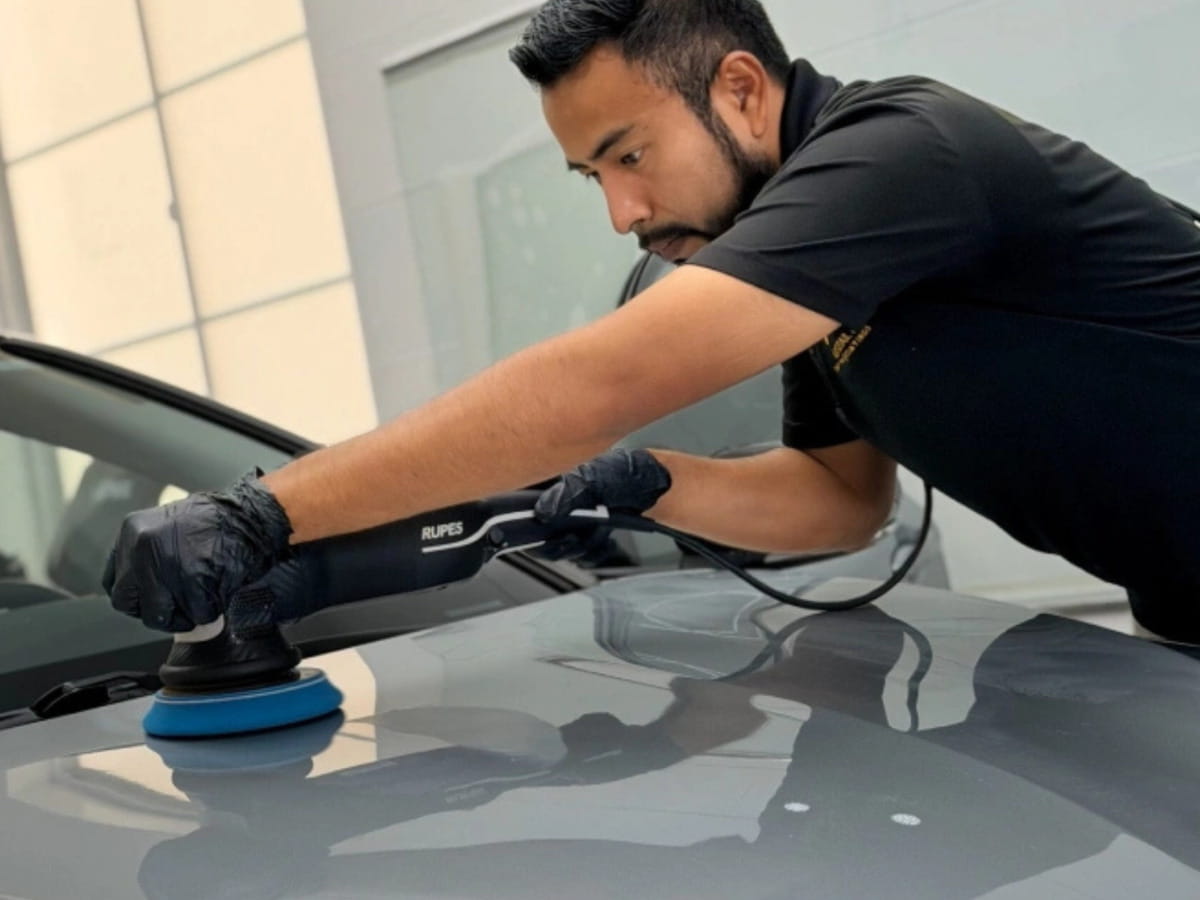
Depending on the condition of the vehicle, correction may involve multiple stages of machine polishing, including different pads and abrasive compounds. More significant defects may require additional refinement before the final polishing stage.
Professional paint finishing systems use separate processes for defect removal, scratch refinement, compounding and polishing because each stage has a different purpose.
The goal is to improve the surface by safely reducing visible defects while preserving as much usable clear coat as possible.
Myth #2: Paint Correction Removes Every Scratch
Reality: Some scratches can be corrected, while more serious damage may remain.
Many swirl marks, fine scratches and other surface defects exist within the clear coat and can be reduced or removed through appropriate correction.
However, if a scratch extends through the clear coat into the base coat or deeper layers, polishing alone cannot restore the original paint.
That is why an honest paint assessment matters before promising a particular result.
Myth #3: More Aggressive Correction Always Means a Better Finish
Reality: The best correction is the one that achieves the desired improvement without unnecessary paint removal.
Different vehicles have different paint systems, hardness levels, previous repairs and existing clear-coat conditions. The appropriate combination of pad, compound, polish, machine and technique depends on those variables.
A professional detailer should therefore balance defect removal with paint preservation rather than automatically choosing the most aggressive approach.
Myth #4: Paint Correction Damages Your Paint
Reality: Improper correction can damage paint, but professional correction is designed to be controlled.
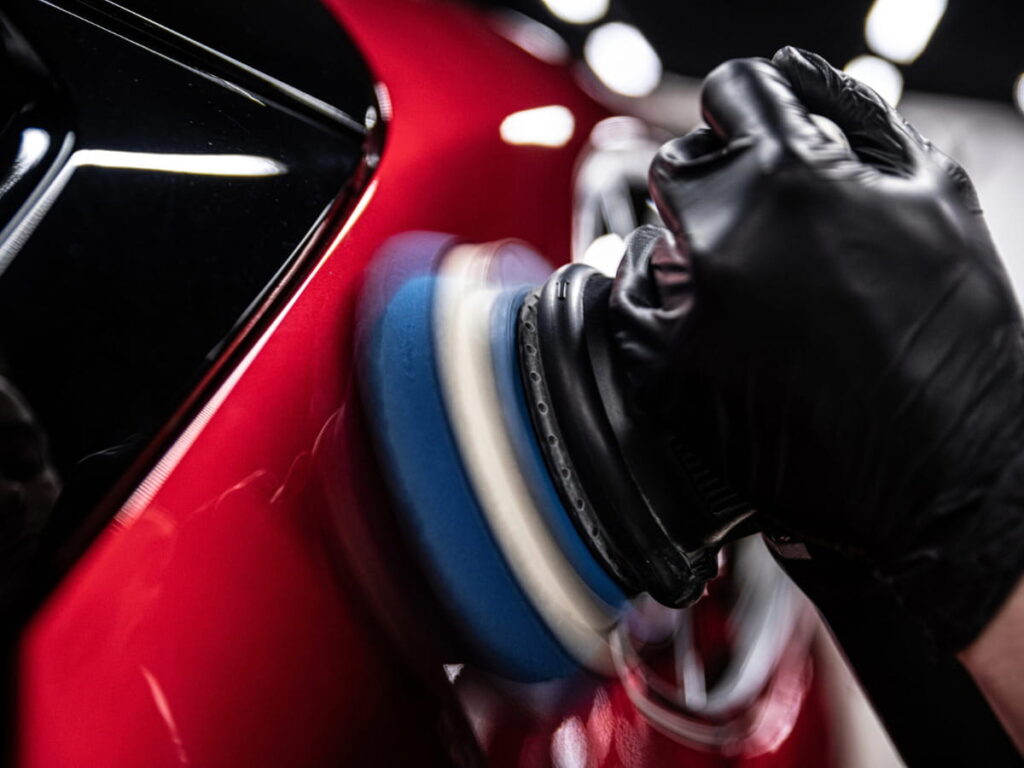
Machine polishing works by using an abrasive process to refine the surface. That means material is being removed at a microscopic level.
The key is controlling how much correction is actually necessary.
Professional paint-finishing systems are specifically designed for working on automotive clear coats, with different abrasive and polishing solutions available depending on the defect and finish.
The objective is not to remove as much clear coat as possible. It’s to achieve the appropriate improvement while maintaining the integrity of the finish.
Myth #5: One-Step Paint Correction Fixes Everything
Reality: One-step correction can produce a significant improvement, but it cannot address every type or severity of defect.
A one-step process can be an excellent choice when the vehicle primarily needs gloss enhancement and reduction of lighter defects.
More heavily marked paint may require multiple correction stages. Professional paint finishing procedures can include defect removal, compounding, polishing and ultrafine finishing depending on the condition of the surface.
The right process should be determined by the vehicle.
Myth #6: Paint Correction Is Only for Older Cars
Reality: Newer vehicles can benefit from paint correction too.
A newer vehicle isn’t necessarily free from paint defects. Swirl marks, washing-induced micro-scratches, dealership preparation marks, water spots and other imperfections can already be present.
Correction can therefore be useful when the goal is to refine the finish before applying a protective service such as ceramic coating or paint protection film.
Myth #7: Paint Correction Protects Your Paint
Reality: Paint correction improves the finish; protection is a separate step.
Correction and protection serve different purposes.
Paint correction addresses existing surface defects. Ceramic coating and paint protection film (PPF) are protective services designed to help protect the finish going forward, each in a different way.
What Should You Expect From Professional Paint Correction?
A quality correction should begin with an inspection rather than a promise.
Your detailer should consider:
- The type and severity of paint defects,
- The condition of the clear coat,
- Previous paintwork or repairs,
- The vehicle’s paint system,
- The desired level of correction,
- Whether additional protection will be applied afterward.
At Zippy Cup Auto Detail, every vehicle is treated individually, with attention to preparation, materials and technique. Our at San Diego locations provides paint correction, ceramic coating, paint protection film, window tint and professional detailing, with both in-house and mobile services available throughout the greater San Diego area.
If your paint has lost its gloss or is covered in swirl marks and surface defects, don’t assume you need the most aggressive correction available.
Start with an assessment. The right correction is the one that improves your finish while respecting the paint you have.
Contact Zippy Cup Auto Detail to discuss your vehicle and find the right approach for its condition, use and desired finish.