
If you drive in Southern California, you already know that the sun can make your vehicle feel hot long before the outside temperature becomes extreme.
From daily commutes through San Diego to long drives across Southern California, your vehicle’s windows are constantly exposed to sunlight. That heat affects cabin comfort, while ultraviolet (UV) radiation can contribute to fading and deterioration of interior materials over time.
So, what is the best window tint for Southern California weather?
For drivers who prioritize heat rejection, UV protection, clarity, and long-term performance, high-quality ceramic window tint is one of the strongest options available. But the darkest tint is not automatically the best tint, and the right film also needs to comply with California law and suit the way you use your vehicle.
At Zippy Cup Auto Detail, XPEL window film is an option for drivers looking for premium performance, professional installation, and long-term comfort in Southern California’s demanding climate.
Here’s what actually matters when choosing window tint in Southern California.
Why Southern California Is Tough on Vehicles
Southern California’s climate is one of the main reasons quality window tint is more than an appearance upgrade.
The San Diego area, for example, experiences substantial sunshine and can still see significant heat and humidity variations. National Weather Service climate data shows that San Diego regularly experiences warm summer temperatures and periods of high relative humidity.
Your vehicle’s windows are directly exposed to solar radiation every time you’re driving or parked outside.
That exposure can contribute to:
- A hotter interior,
- Increased glare,
- Greater reliance on air conditioning,
- Fading of seats, dashboards, and other interior materials,
- Increased discomfort during longer drives.
Quality window film helps reduce the amount of solar energy entering through the glass while also providing UV protection.
The important distinction is that window tint should be evaluated by its actual performance, not simply how dark it looks.
What Makes a Window Tint “Good”?
When comparing window tint, don’t focus only on the percentage printed on the sample.
A quality automotive film should be evaluated based on several characteristics.
- Heat Rejection
For Southern California drivers, this is often the biggest consideration.
A high-performance film can reject a significant portion of solar energy, helping reduce the amount of heat entering the cabin.
Some ceramic automotive films are engineered specifically to reduce infrared and total solar energy entering the cabin. XPEL’s premium window films are designed to provide strong heat rejection and UV protection while maintaining optical clarity, although exact performance varies by product and testing conditions.
- UV Protection
UV protection is another important benefit.
High-quality automotive films can block the vast majority of UV radiation, helping reduce exposure for occupants and helping protect interior materials from premature fading.
Some premium films advertise UV rejection of up to 99.9%, although actual performance depends on the specific product and installation.
- Optical Clarity
A good tint should not make your windows look hazy, distorted, or uneven.
This becomes particularly important on the windshield and front-side windows, where clear visibility is essential.
- Color Stability
Lower-quality films can discolor or develop a purplish appearance over time.
A professionally manufactured film with good color stability is designed to maintain its appearance for years rather than simply looking good immediately after installation.
- Durability
The film should be properly bonded to the glass and installed without bubbles, peeling, contamination, or visible edges.
That is where product quality and installation quality work together.
Types of Window Tint Explained
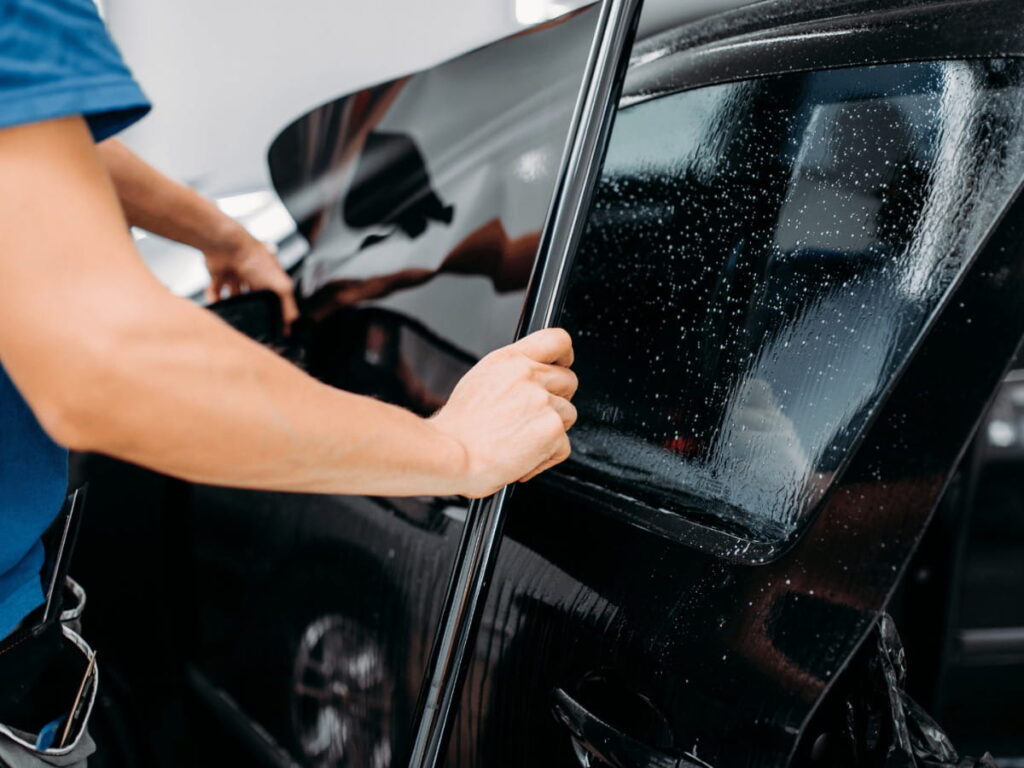
Not all window films are built the same way.
- Dyed Window Tint
Dyed film is generally one of the more basic options.
It can provide privacy, glare reduction, and some solar control, making it suitable for drivers primarily interested in appearance and basic performance.
However, it typically does not provide the same level of heat rejection as higher-performance ceramic films.
- Carbon Window Tint
Carbon films generally offer better performance and color stability than traditional dyed films.
They can provide good heat rejection without the metallic appearance associated with some older film technologies.
For drivers looking for a balance between price, appearance, and performance, carbon can be a reasonable option.
- Ceramic Window Tint
Ceramic film uses ceramic or nano-ceramic technology to improve solar and infrared rejection without relying on a metal layer.
That can provide strong heat rejection while maintaining optical clarity and avoiding interference concerns associated with some metallized films.
For example, XPEL’s ceramic window films are engineered to provide heat and infrared rejection without relying on a metallic layer, helping maintain optical clarity while improving cabin comfort.
For Southern California drivers who spend significant time in their vehicles, ceramic tint is often the best overall choice when comfort and performance are the priorities.
Why Ceramic Tint Is the Best Choice for Southern California
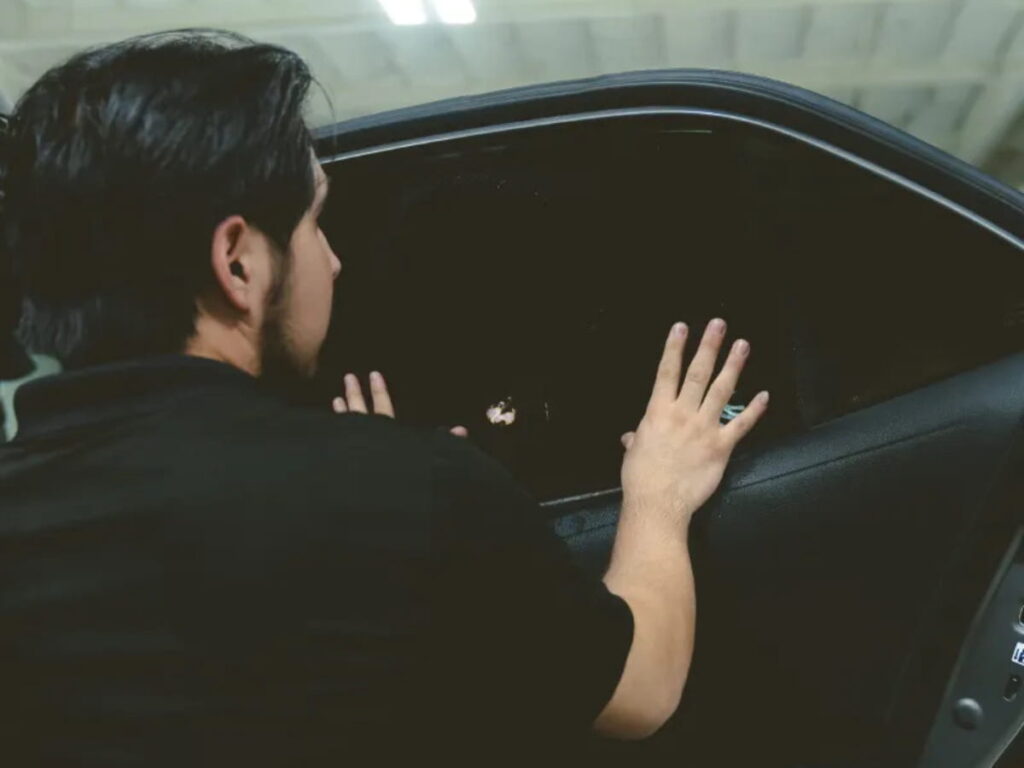
The biggest advantage of ceramic tint isn’t that it is simply “darker.”
It is that it can deliver significant solar performance without requiring an extremely dark appearance.
That’s an important distinction in California.
A premium ceramic film can provide heat and infrared rejection while maintaining a lighter visible appearance than someone might expect from a high-performing tint.
Depending on the product, ceramic films can provide substantial infrared and total solar energy rejection while also blocking most UV radiation.
Ceramic tint can be especially useful for drivers who:
- Park outside regularly,
- Commute long distances,
- Drive during the hottest part of the day,
- Want strong UV protection,
- Want heat rejection without extremely dark glass,
- Prefer a clean, non-metallic appearance.
The exact performance, however, depends on the film. “Ceramic” is a technology category, not a guarantee that every ceramic film performs identically.
California Window Tint Laws
This is where choosing tint in California gets more complicated.
The legal limit depends on which window you’re tinting and what type of material is being used.
California Vehicle Code §26708 generally restricts materials that reduce light transmission on vehicle windows, with specific exceptions.
For the front side windows, California law currently allows certain clear, colorless, transparent UV-reducing materials when specific requirements are met. The statute specifies a minimum 88% visible light transmittance for the material itself, and the glazing with the material applied must meet the applicable federal safety-glazing requirements, including the specified 70% minimum light transmittance. Required certification must also be kept in the vehicle.
There are additional rules concerning the windshield and other windows, and California law contains limited exceptions.
Because tint legality can depend on the exact window, film, glass, and installation, it’s important not to assume that a film is legal simply because another vehicle has the same shade.
A professional installer should help you choose a film and shade that comply with current California requirements.
Is Ceramic Tint Worth the Cost?
For many Southern California drivers, yes, but the answer depends on what you value.
If your only goal is making the windows darker, you can spend less on a basic film.
But if your goal is heat rejection, UV protection, comfort, optical clarity, and long-term performance, premium ceramic tint offers considerably more than a darker appearance.
Think about how often you use your vehicle.
If you spend an hour or more commuting every day, regularly park outside, or frequently drive in direct sunlight, the comfort difference can become much more meaningful than it would be for someone who drives only occasionally.
You’re not simply paying for darker glass.
You’re paying for the technology inside the film, its performance characteristics, its durability, and professional installation.
Choosing the Right Tint for Your Vehicle
The “best” tint isn’t necessarily the darkest option.
Instead, consider four questions:
How Much Heat Do You Want to Reduce?
If cabin temperature and solar heat are your biggest concerns, prioritize a high-performance ceramic film with strong solar and infrared rejection.
How Much Privacy Do You Want?
Darker film provides greater privacy, but darkness and heat rejection are not the same thing.
A quality ceramic film can provide excellent thermal performance without relying solely on darkness.
Where Are You Installing It?
The legal requirements are different depending on whether you’re tinting the rear windows, front side windows, or windshield.
Always consider California law before choosing a shade.
How Long Do You Plan to Keep the Vehicle?
If you’re keeping the vehicle for several years, investing in a quality film and professional installation can make more sense than choosing the cheapest available option.
Why Professional Installation Matters
Even the best window film can perform poorly when it is installed incorrectly.
Professional installation helps ensure:
- Proper film alignment,
- Clean edges,
- Minimal contamination,
- Consistent appearance,
- Proper adhesion,
- Fewer bubbles and imperfections,
- Correct application for the vehicle’s glass.
The installer also needs to account for the vehicle’s existing glass, curves, seals, and electronics.
This matters because window tint isn’t just a roll of film. The final result depends on both the material and the installation.
At Zippy Cup Auto Detail, window tint is part of a broader approach to vehicle protection and appearance. The team works with drivers throughout El Cajon and the greater San Diego area, tailoring services to the vehicle and the owner’s priorities rather than treating every car the same.
The Bottom Line: What Is the Best Window Tint for Southern California?
For most Southern California drivers who want strong heat rejection, UV protection, comfort, and long-term performance, a high-quality ceramic window tint is one of the best options to consider.
But choosing the right film is only part of the decision.
You also need the appropriate shade, a product with verified performance, and an installation that complies with California’s current window-tint requirements.
And remember: darker does not automatically mean cooler.
A well-designed ceramic film can reject substantial solar and infrared energy while maintaining a relatively clear appearance, which makes it particularly useful in a climate where both heat and California tint regulations matter.
Get Professional Window Tint in El Cajon, CA
If you’re tired of stepping into a hot car, dealing with glare, or watching your interior take a beating from the Southern California sun, the right window tint can make a noticeable difference.
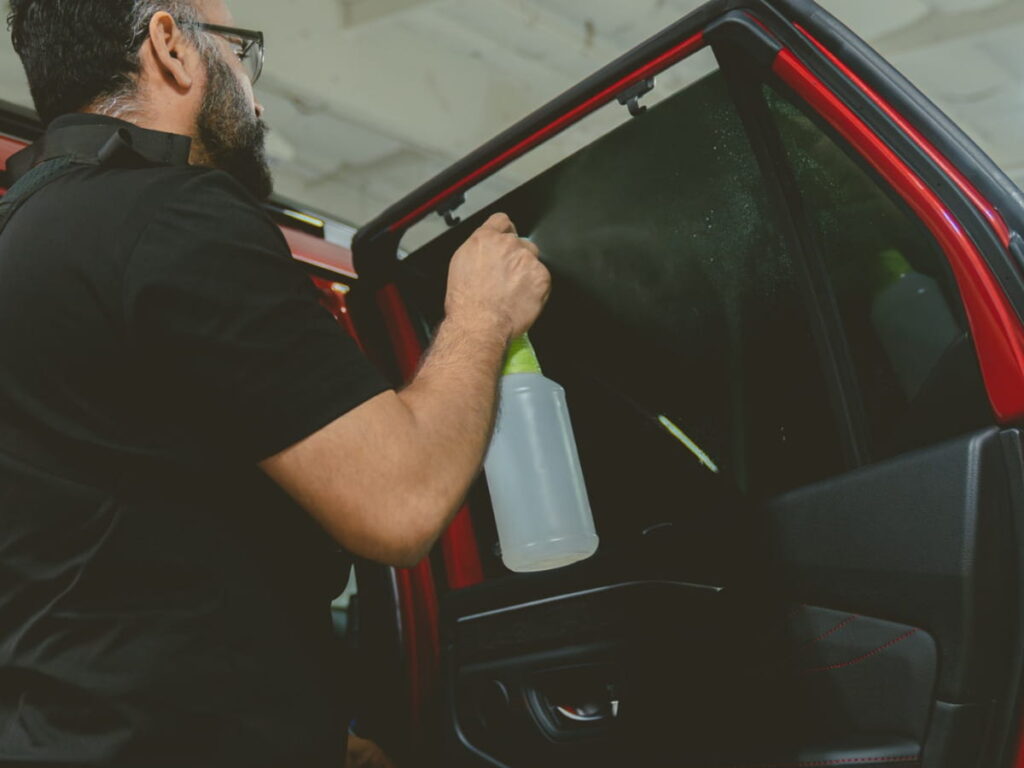
Zippy Cup Auto Detail provides professional window tint, ceramic coating, paint protection film, auto detailing, paint correction, vinyl wrap, and other vehicle protection services in El Cajon and the greater San Diego area.
Whether you’re looking for maximum heat rejection, better UV protection, improved comfort, or a clean finished appearance, the team can help you choose a window film based on your vehicle, driving habits, and goals.
Ready to upgrade your vehicle?
Contact Zippy Cup Auto Detail today to discuss your window tint options and schedule your installation.
Protect your vehicle. Stay cooler. Drive more comfortably.