
While both aim to improve cleanliness, hygiene, and appearance, they work differently and offer different results. Many car owners today are choosing interior steam cleaning as their go-to method. Here’s why this approach is becoming more popular, and how it compares to traditional shampooing.
What is basic interior shampooing?
Interior shampooing usually involves applying a cleaning solution to the car’s carpets, floor mats, and cloth seats. The process uses a mix of water and soap or detergent to lift surface stains and dirt. A technician will often use a brush or machine to scrub the area, then vacuum out the moisture.
Shampooing does help remove visible dirt and can improve the look of worn interiors. However, it uses a lot of water and may leave fabric damp for several hours. In some cases, seats and carpets can stay wet for more than a day, especially if the weather is humid or cloudy. That moisture, if not dried properly, can lead to odor issues or even mildew.
What is interior steam cleaning?
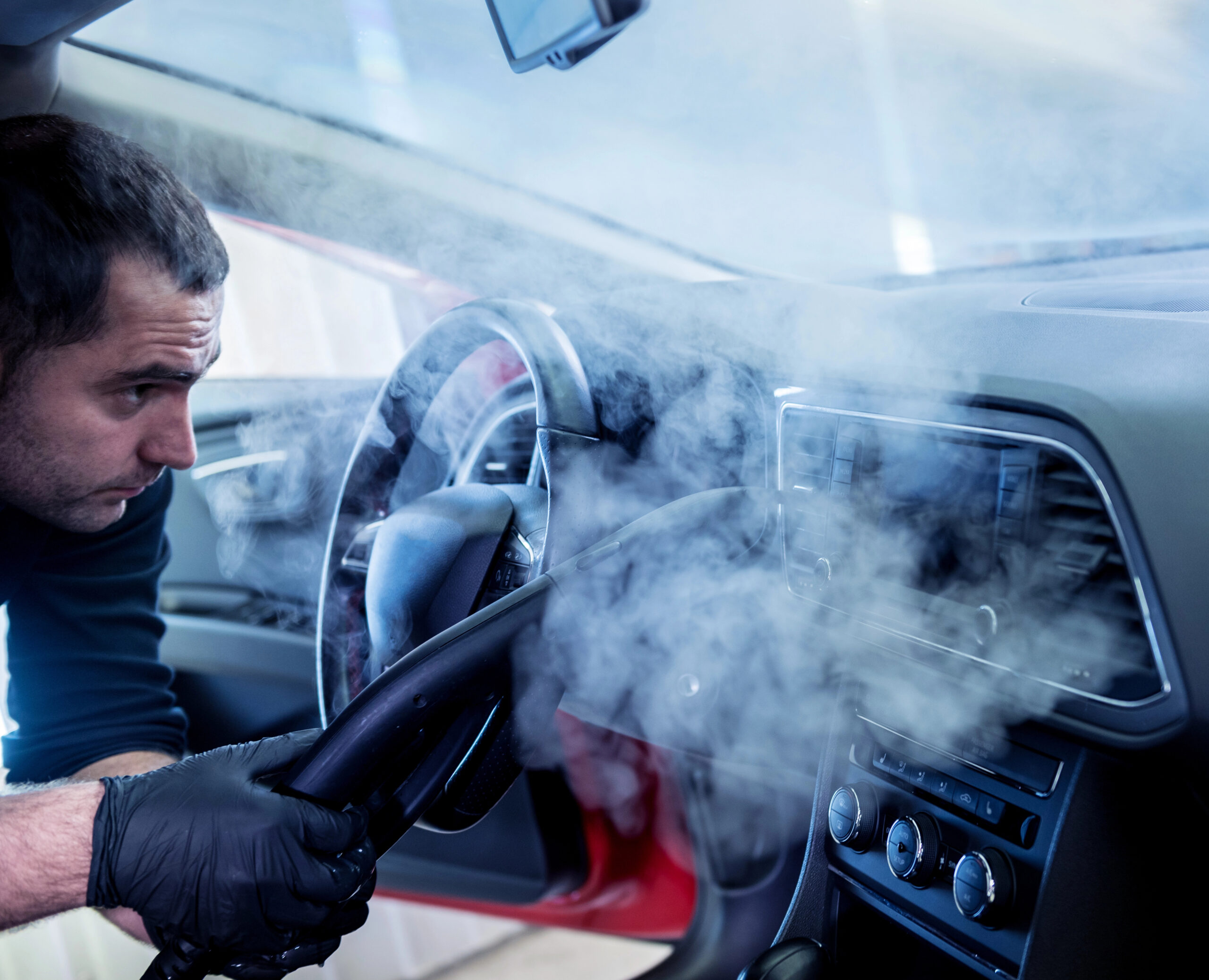
Steam cleaning uses vapor from heated water to clean interior surfaces. Instead of scrubbing with soap and water, a steam machine applies heat and pressure to remove dirt, oil, and bacteria. This process is used on seats, carpets, door panels, and even hard-to-reach areas like cup holders, vents, and seams.
Because it uses vapor, steam cleaning doesn’t soak the materials. The surface becomes damp but dries much more quickly than after a shampoo. No harsh chemicals are needed—just heat and water. Steam is often used by professional detailers for its ability to clean more deeply and more safely.
Key differences between steam cleaning and shampooing
Both steam cleaning and shampooing are used to clean the inside of a car, but they go about it in very different ways. While shampooing has been around longer and is still commonly used, steam cleaning is quickly gaining popularity because of its efficiency and better results.
Here’s a closer look at how the two methods compare across different categories:
Drying time
Steam cleaning uses very little water, so surfaces don’t get soaked. After cleaning, seats and carpets are just slightly damp and usually dry within an hour. This makes it easy to get back in your car and go about your day without delay.
Shampooing, on the other hand, uses lots of water and cleaning solutions. Even after vacuuming, the fabric can hold moisture deep inside. Drying can take several hours—or longer if the weather is humid—making it less convenient for most car owners.
Cleaning strength
Steam is very effective at loosening deep-set grime, grease, and stains. The high temperature helps clean fabric down to the fibers, removing things you can’t see, like germs and allergens. It’s especially helpful for older or more stubborn messes.
Shampooing works well on surface-level dirt and light stains. But it often can’t reach what’s beneath the top layer. Some stains may come back after drying, especially if moisture pushes them deeper into the fabric or padding.
Water and chemical use
Steam cleaning requires very little water—usually less than a quart—and often doesn’t need soap. It’s a good option for people who prefer natural cleaning methods and care about using fewer resources.
Shampooing uses a mix of soap and several gallons of water. Some of these chemicals may leave behind a residue or scent. It’s less eco-friendly and may not be ideal for people with allergies or sensitivities.
Odor removal
Steam can remove bad smells by breaking down the source of the odor. The heat kills bacteria and lifts particles that cause unpleasant scents, like food spills, smoke, or pet accidents.
Shampooing might make your car smell better at first because of the fragrance in the cleaning solution. But if moisture remains trapped, the odor can return quickly. In some cases, it might even cause a musty smell later on.
Health and hygiene
Steam cleaning naturally kills germs, mold, and dust mites without using chemicals. It’s a safe and sanitary way to clean the interior, especially for families with kids or people who have breathing issues.
Shampooing does help remove dirt, but it doesn’t sanitize the way steam can. The leftover moisture may create an environment where bacteria or mold can grow over time if the car doesn’t dry properly.
Ability to reach tight spaces
Steam tools can reach into small areas like seat tracks, air vents, and cup holders. The vapor easily gets into corners that are difficult to clean with brushes or cloths. Shampooing usually focuses on large, flat surfaces and doesn’t work well for detailed areas. Smaller spots often get missed or are left only partially cleaned during a basic shampoo job.
Interior protection and maintenance
Steam is gentle on surfaces when used by a trained technician. It doesn’t wear out the fabric or plastic and is safe for cleaning leather, vinyl, and other sensitive materials. Shampooing often involves more scrubbing, which can cause fabric to wear down or fade over time. Harsh soaps may also cause damage if not rinsed out properly.
Convenience and time-saving
Steam cleaning is faster overall. The quick dry time and minimal mess make it ideal for mobile detailing or same-day service. Shampooing takes more time, both for the actual cleaning and the drying process. It may require leaving your car parked for several hours or overnight, which isn’t ideal if you need it soon after cleaning.
Why choose steam cleaning over shampooing?
Steam cleaning stands out as the better choice for most car owners who want deep, efficient, and eco-friendly interior cleaning. It offers faster drying times, kills germs without harsh chemicals, and reaches tight spaces that shampooing often misses. Steam is also gentle on materials, making it safe for everything from fabric seats to leather and dashboard trim.
While shampooing may work for light surface stains, it can leave behind excess moisture and residue that lead to odors or fabric wear over time. If you’re looking for a cleaner, healthier, and more convenient option—especially for regular maintenance—steam cleaning gives you better long-term results with less hassle.
FAQs
- Does steam cleaning work on leather seats?
Yes, steam can safely clean leather. It opens up pores and helps remove grime. Just be sure a conditioner is applied afterward to keep the leather soft.
- Will my car smell like steam afterward?
No strong odors remain after steam cleaning. In fact, steam helps eliminate unpleasant smells instead of covering them up with perfume.
- Is steam cleaning safe for electronics inside the car?
Yes. Professionals are trained to avoid screens, sensors, and other sensitive parts. Steam is used carefully in short bursts where needed.
- How often is interior steam cleaning needed for a car?
Most cars benefit from steam cleaning every 3 to 6 months, depending on usage and interior conditions.
- Can steam remove coffee or food stains?
Yes, steam can remove many food and beverage stains. The heat softens the stain, and a wipe or vacuum removes it completely.
Zippy Cup Auto Detail San Diego
596 N Mollison Ave #102, El Cajon, CA 92021
619-745-1536